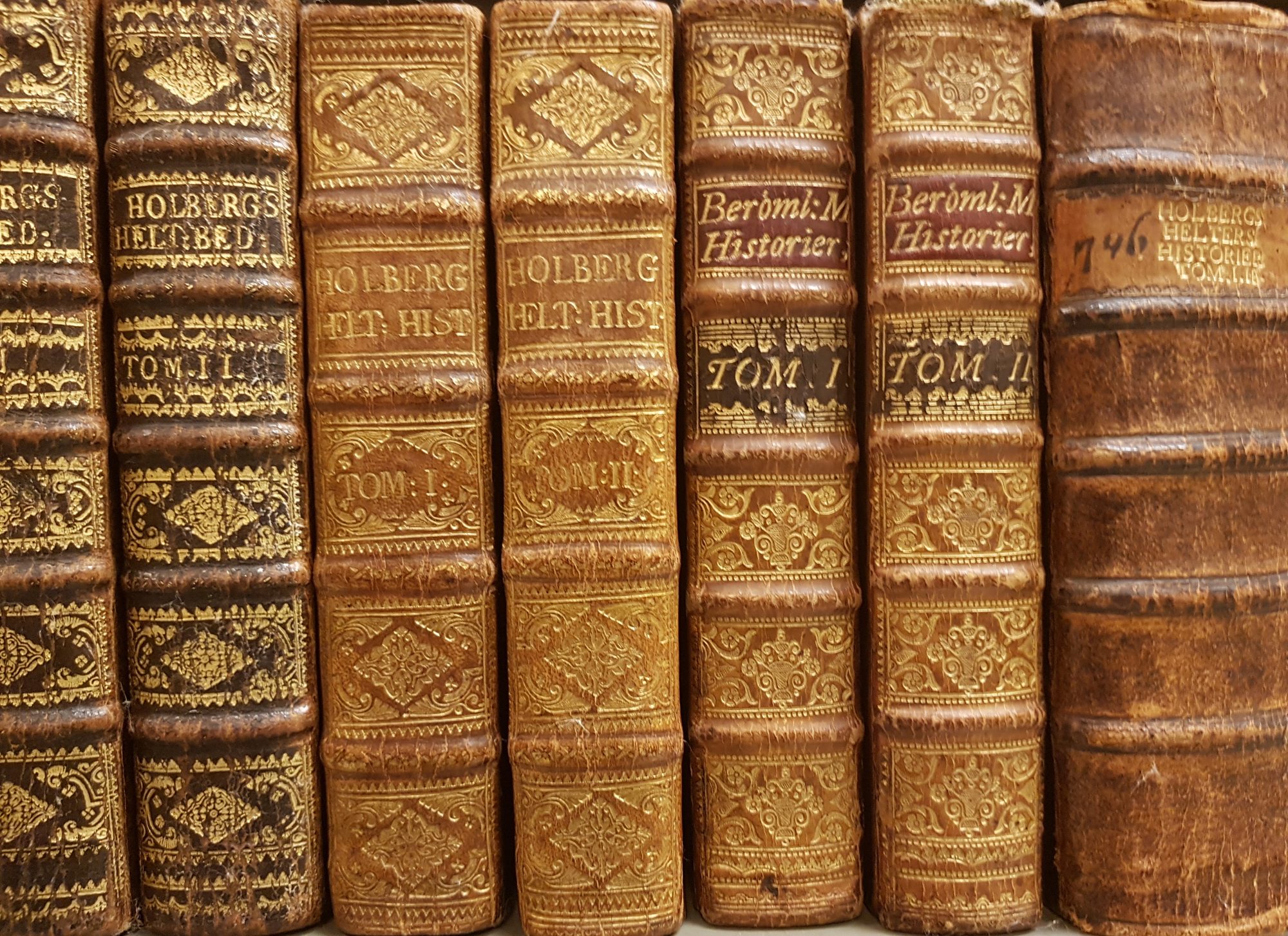
by Christa Shusko
When I was younger, I thought that it was impossible to have too many books, but when preparing to move across an ocean, this view changed. I’m not sure how many books I once had, but can say that when preparing to move, I thinned the herd to about 30 boxes that I thought I could not do without. That was probably less than half of what I had when starting the process. In the intervening years, I sold or gave away more than half of those books that remained in storage, whittling it down to less than 10 boxes.
The books that remain—and the smaller percentage of those that have made their way to Sweden—are not at all well-organized. While in graduate school in the early 2000s I developed a system for organization based on which authors or books I thought might benefit from spending time together. Freud used to live on my shelves next to Kierkegaard, for example.
As my library grew substantially over the years while moving not infrequently around the US, the organization gradually devolved into subjects or genres, with many books grouped within those categories according to author. Many were also grouped according to their use in different courses I took or taught over the years. My “system” for shelving since coming to Sweden has been more focused on simply finding open spots on shelves (my partner has a lot of books too!) and squeezing them in accordingly. A librarian’s nightmare, truly.
I am a voracious reader of obscure (often preachy and/or trashy) late 19th century fiction, and it has often been far easier to locate digitized rather than physical copies even prior to moving to Sweden; I still read a lot of books in that way, which made the great book purge and move less traumatic than it might have been.
The books that I saved and the smaller number that have made their way to Sweden are ones that I have some need to reread. In terms of books that I read purely for pleasure, I have favored literature that is both concise and dense such as poetry and short stories such as Theodore Roethke, Louise Glück, and Shirley Jackson. Several books related to long-languishing research that I hope to complete someday have also made their way to Sweden. Some of these are more recent academic publications, but my favorites are the historical titles, including titles by Alice Bunker Stockham and Eleanor Kirk, both of whom were suffragists and religious visionaries who founded their own publishing companies in the late nineteenth century.
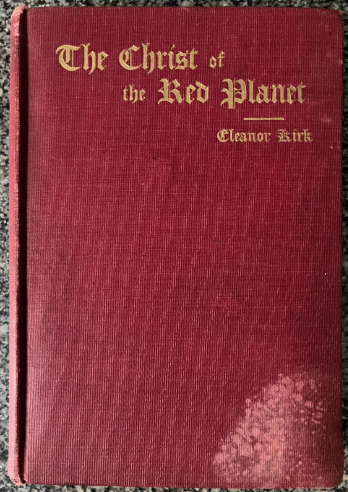
This book details Kirk’s experience of a kind of astral projection to the planet Mars where she meets a telepathic pony and a very fit—and red as befit the planet—Christ. While I do hope to research and write more on Kirk in the future, I have published two academic chapters that discuss this particular work.
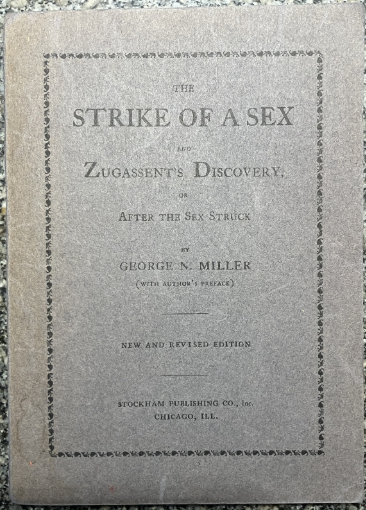
Miller had been a devoted member of the Oneida Community or the Oneida Perfectionists which is perhaps best known for its radical sexual reforms (and its silverware). Miller wrote this book after the Community ended its “religious experiment” in the 1880s. While various editions appeared—some with quite interesting differences as regards religious language—with the earliest in 1891, Alice Stockham published a number of editions, with this one appearing first in 1898, reprinted in 1905. This was one of the titles that led to Stockham being tried on obscenity charges under the Comstock Act in 1905. She was unsuccessfully defended by Clarence Darrow, more famous for his later role in the “Scopes Monkey Trial.” The book is much less racy than one might expect based on these facts, being a version of the Lysistrata based upon the theology and practices of the Oneida Community.
Of course a few books came along for no clear reason other than that they are fun to look at as in the case of an edition of Montaigne’s essays illustrated by Salvador Dali, and this beauty:
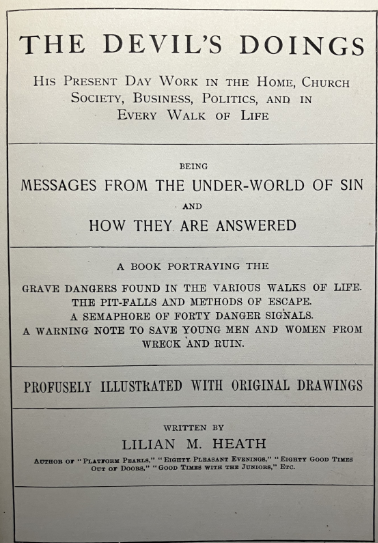
The extended title goes on to describe: A book portraying the grave dangers found in the various walks of life, the pit-falls and methods of escape, a semaphore of forty danger signals, a warning note to save young men and women from wreck and ruin. Profusely illustrated with original drawings.